
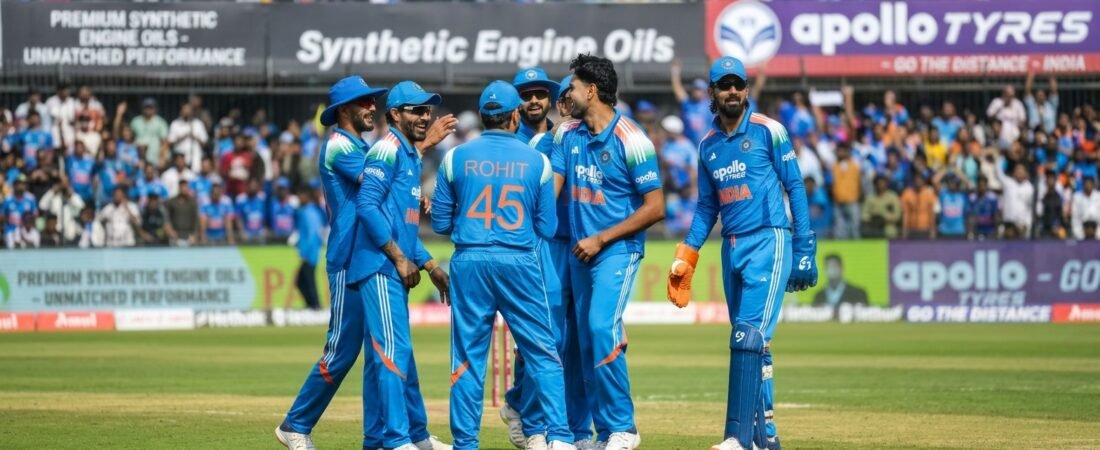
Ask a casual fan to name the key moments of a limited-overs match and you’ll hear the same answers: a blazing powerplay, a last-over finish, a spectacular catch on the boundary. Rarely does anyone say, “the 24th over.”
Yet the cricket middle overs are often where the result is quietly written. No fireworks, no roaring crowd, just a few singles, a tight spell or a wicket that changes the shape of the innings. If you want to understand why one team wins and the other falls short, this is where to look.
What are the middle overs in cricket?
The middle overs are the stretch between the powerplay and the final overs, when fielding restrictions ease and the game settles into a rhythm.
- In ODIs, this is roughly overs 11 to 40, the longest phase of the match.
- In T20s, it’s roughly overs 7 to 15 or 16, shorter but just as decisive.
The field spreads, boundaries get harder to find, and both sides shift from attacking to building. That’s exactly why the phase gets overlooked, and exactly why it matters.
Why the quiet phase carries so much weight
The powerplay sets the platform and the death overs deliver the finish, but the middle overs decide what that finish looks like.
A batting side that loses two wickets in this phase arrives at the end with fewer options and less freedom to attack. A side that keeps wickets in hand gets to swing hard in the final overs without worrying about collapsing. The scoreboard may look similar at the halfway point, but the two innings are in very different positions.
The same applies to bowling. A team that squeezes runs here forces the batters into riskier shots later, and that’s usually when wickets fall.
5 things the middle overs reveal
1. Strike rotation
Good teams don’t wait for boundaries. They turn ones into twos and keep the scoreboard moving. A string of dot balls builds pressure quickly, so watch how often the batters take a single off the last ball of an over to retain the strike. It’s a small habit that separates composed sides from nervous ones.
2. How teams use spin
Spinners are the engine of the middle phase. They slow the game down, tempt batters into mistimed shots and take wickets while the field is spread. Notice when the captain brings them on, and whether the batters take them on or play them out. A side that struggles against spin will often go quiet in this phase for the wrong reasons.
3. Wickets in hand
Wickets in hand is the most important number in the middle overs, even though it’s rarely shown prominently. A team at 150/2 in the 30th over of an ODI is in a far stronger position than a team at 150/5, even though the scoreboard looks identical. Experienced viewers read the wickets column first.
4. The batting partnership
Look for the stand that lasts. A partnership of 60 or 80 runs in this phase, built mostly on singles and the odd boundary, usually does more for the final total than a quick burst at the death. It protects the innings and lets the finishers play freely.
5. The captain’s decisions
Field changes, bowling changes and the timing of a review are all tactical signals. A captain who attacks with a slip or short midwicket when the game looks quiet is hunting wickets. One who goes defensive is trying to hold the opposition’s score down. Neither is wrong, but the choice tells you what the team thinks it needs.
What about Test cricket?
The same idea applies in Tests, just across sessions instead of overs. The long, uneventful stretch in the middle of a day, often after the new ball loses its shine, is where bowlers build pressure with tight lines and batters decide whether to defend or counterattack. A session with only 60 runs and one wicket can look dull, but it often decides who controls the next two days.
How to watch the quiet overs next time
Try this during your next match:
- Check the wickets in hand at the start of the middle phase and again at the end.
- Count the dot balls in each over. Three or more in a row means pressure is building.
- Watch who bowls. Spin or medium pace in the middle usually signals a plan to restrict scoring.
- Follow the required or projected run rate. Small changes across the phase show who is gaining control.
By the time the final overs begin, you’ll often know who’s ahead before the commentators say it.
Your Next Match Checklist
Before the next ball is bowled in the middle phase, do these three things:
- Note the wickets in hand when the powerplay ends.
- Count the dot balls in each over and watch who breaks the pressure first.
- Check the bowling change. If a spinner comes on, track how the batters respond.