
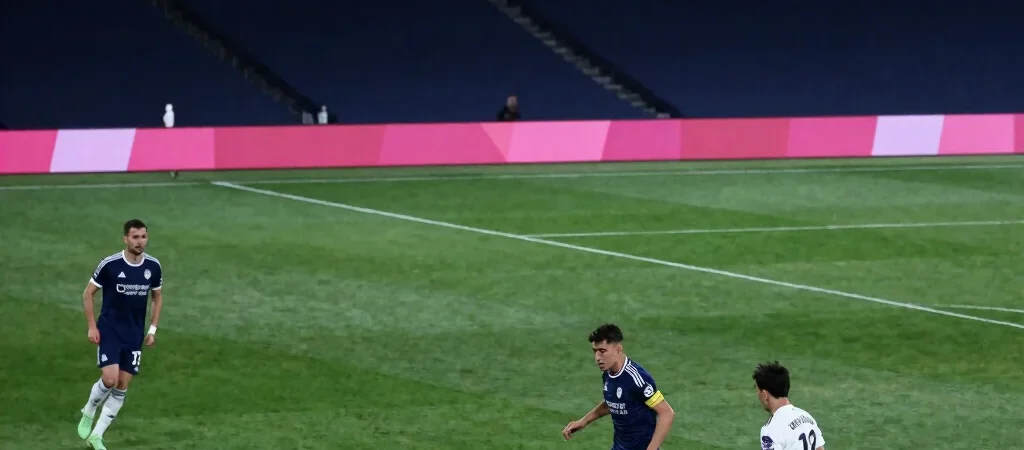
A center back receives the ball with a forward closing fast and the crowd rising. That first run can look like the start of a press, but the real test is what happens next: does a teammate shut off the easy pass, and is the defensive line ready for a ball over the top? The shape around the pressure often matters more than the chase itself.
Read the First Two Runs
The first player usually curves their approach to steer the ball toward a chosen side rather than running straight at the receiver. A second player can then jump toward the fullback or midfielder who appears to be the safe outlet. When those movements arrive together, the opponent may find that the pass they wanted was never really available.
Look at the nearest central midfielder, too. If they step forward to close a passing lane, the space behind them becomes a risk their teammates must cover. A well-timed press is a collective bet: squeeze the ball now, while keeping enough protection to deal with the next pass.
When the Trap Breaks
One clean pass can turn a crowded press into open grass. A first-time ball around the pressing forward, a composed touch away from pressure, or a switch to the far side can expose how many players have moved toward the ball. The turning point is often the moment the receiver escapes—not the moment the ball is won.
To judge whether a team pressed well, follow the next few seconds. Did the opponent have to rush a clearance, or could they carry the ball into space? Did the pressing side recover its shape after the trap was beaten? That is the story behind the score: not simply how hard a team ran, but whether its pressure made the opponent's next decision harder.