
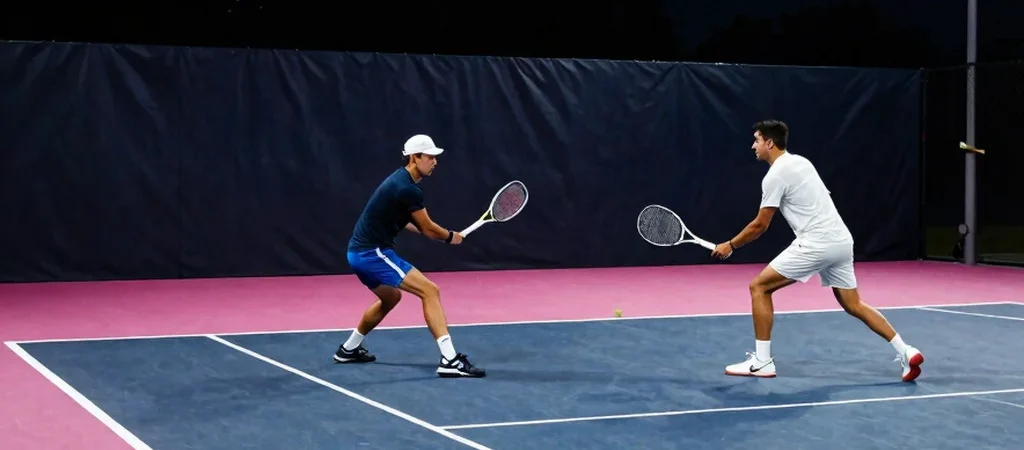
A tennis rally ends with a ball in the open court, and the eye naturally follows the shot. But the player who hit the winner may have created that opening several strokes earlier, by pushing an opponent deep or pulling them wide. Read the rally as a sequence of choices, not a collection of highlights.
Start With Depth and Recovery
A deep groundstroke can keep an opponent behind the baseline, making it harder for them to take the next ball early. After each shot, notice how the hitter recovers and where they expect the return to go. Recovery position is not always the exact center of the court; it depends on the angle and pace they have just created.
Crosscourt exchanges often give players more room over the lower part of the net and a longer diagonal to work with. A change down the line can take time away, but it also opens a new angle for the opponent if the ball is not placed well. Surface, spin and court position all affect how risky that change feels.
Find the Point's Turning Ball
Look for the shot that changes the geometry of the rally: a short ball that invites an approach, a wide angle that drags a player off court, or a high defensive reply that allows the other player to step forward. That ball is often more revealing than the final swing because it shows who gained control and why.
The next time you watch a point, pick one player and track their position after every shot. Ask whether they are recovering, defending, or moving forward—and what their opponent has done to make that happen. The score tells you who won the point; the pattern tells you how.