
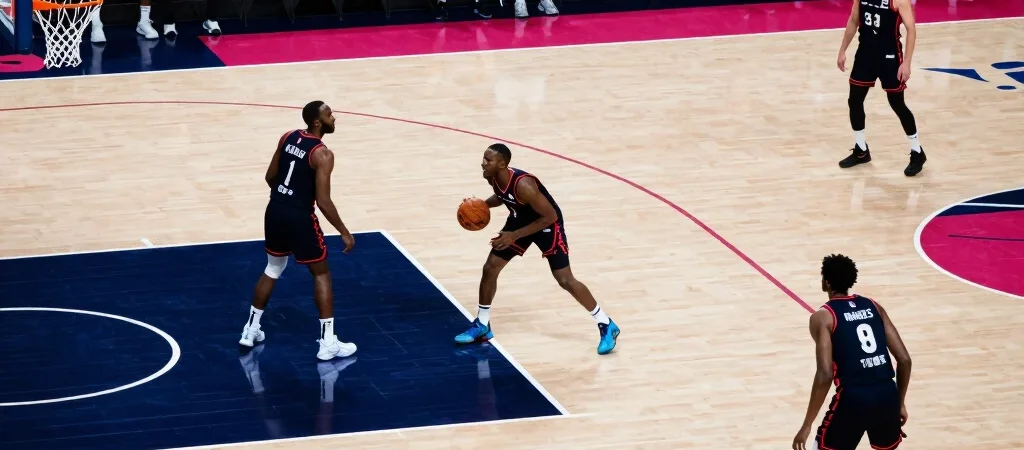
A guard beats their first defender, gets into the lane—and finds three shirts waiting. It is easy to blame the drive, but the floor may have been crowded before the first step. In basketball, the players away from the ball help decide whether a penetration becomes a layup, a kick-out three, or a turnover.
Give the Drive Room
Spacing asks teammates to hold positions that make it costly for defenders to help. A player in the corner stretches the defense toward the baseline; someone higher on the weak side can offer a passing target if the help collapses. The goal is not to stand still, but to avoid bringing another defender into the same lane at the wrong moment.
Watch what the weak-side defender does when the ball handler attacks. If that defender steps into the paint, their assignment may become available for a pass. A teammate can cut behind the help or stay ready outside, depending on the defense's position and the team's spacing principles.
Movement Has to Arrive on Time
A cut that starts too early can bring a defender into the drive's path; one that starts too late may leave the ball handler with no outlet. The best movement often begins when the defense commits, not just because a player has been standing in one spot for several seconds. Timing gives the ball handler a clear read rather than another body to avoid.
On the next possession, follow the players without the ball for a few seconds. Notice who holds the corner, who lifts toward the wing, and whether anyone cuts when a defender turns their head. Those details explain why a drive found space—or why the defense was able to close it.